Nearby places
All places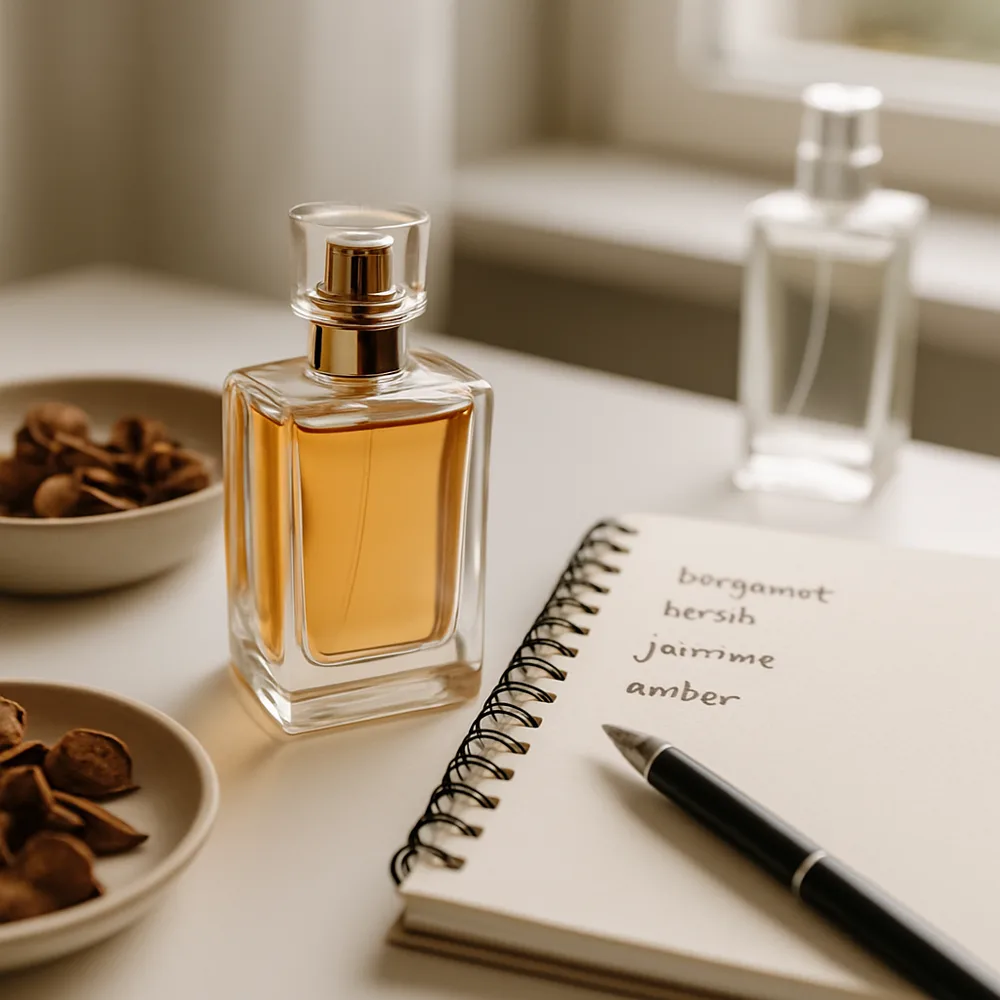
Nearby
Notes in Focus
Get to know familiar and surprising frag

Nearby
Wear It Well
Simple guides to application, storage, s

Nearby
Scent by Setting
Find fragrance inspiration for warm days
Explore

Path
Perfume Reviews
Thoughtful wear notes on how fragrances open, develop, and linger.

Path
Scent Notes
Explore fragrance ingredients, accords, and the impressions they create.

Path
Fragrance Guides
Practical advice for choosing, wearing, and understanding perfume.

Path
Perfume Wardrobe
Ideas for matching scents to seasons, settings, and moods.
Latest
Reading the Pyramid: What Top, Heart and Base Notes Really Tell You
Most perfume descriptions list notes in three tiers, often drawn as a pyramid. It looks precise, but it is best read as a rough map of how a scent is likely to change on your skin over several hours rather than a literal ingredient list.
Top notes: the first impression
Top notes are the lightest, most volatile materials, so they are what you smell in the first few minutes. Citrus peels such as bergamot and lemon, fresh herbs, aldehydes and light fruits often sit here. They are bright and attention-grabbing, which is why a quick sniff from a blotter can mislead you. A perfume that opens with sparkling grapefruit may settle into something warm and woody within half an hour.
Heart notes: the character
Once the opening fades, the heart takes over. Florals like rose, jasmine and iris, spices such as cardamom or pink pepper, and green accords commonly live in the middle. This stage usually lasts the longest during active wear and is where a fragrance shows its real personality. If you want to know whether you will enjoy wearing something all day, judge it here.
Base notes: what lingers
Base notes are heavier molecules that evaporate slowly: woods, musks, vanilla, amber, resins, patchouli and leather. They anchor the lighter materials and are what you might still notice on a scarf the next morning. The base also tells you a lot about which fragrance family a perfume belongs to, a topic covered in our beginner's guide to fragrance families.
Why notes are only part of the story
Note lists are partly marketing. A listed note may come from a natural extract, a synthetic molecule or an accord built from several materials that together suggest the smell, so "sea breeze" or "cashmere" describe an impression, not a raw ingredient. Some modern perfumes are deliberately linear, smelling much the same from start to finish, which makes the pyramid less meaningful. Concentration matters too, since it affects how long each stage lasts; see eau de parfum vs eau de toilette for the differences.
The most reliable way to read notes is to test them yourself: spray once on skin, smell it at the start, after an hour and at the end of the day, and compare what you notice with what the list promised. Our guide to sampling perfume without rushing walks through that process step by step.