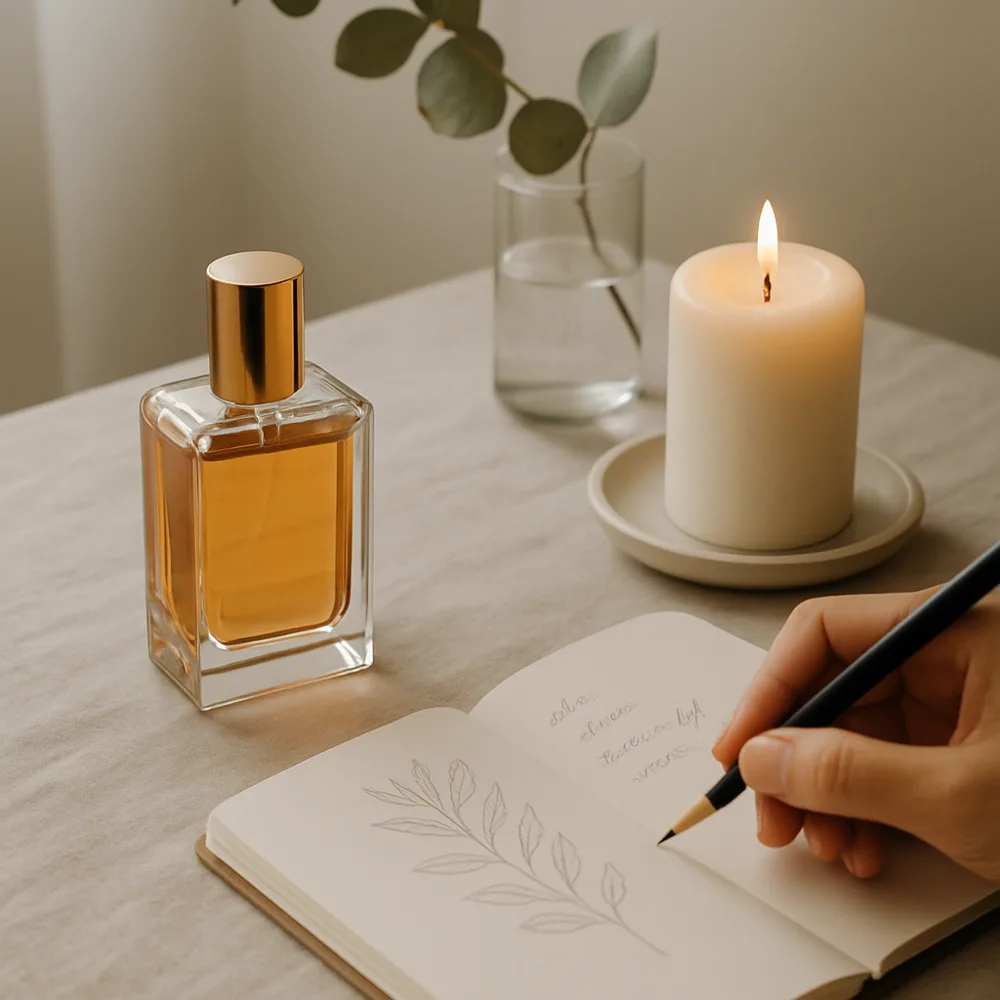
Woody perfumes can evoke many different textures. Cedar often suggests dry pencil shavings or clean timber, while sandalwood is commonly associated with a smoother, creamier impression. Vetiver may feel earthy, rooty, or crisp, depending on how it is used. Other woody materials can bring smoky, polished, or softly textured effects. The word “woody” covers a broad territory rather than one single smell.
Modern fragrance formulas may use natural extracts, aroma materials, or combinations of both to create a woody accord. A description of a wood note does not always mean the perfume contains a large amount of material from that exact tree. Perfumers can build an impression by blending several ingredients, much as a painter combines colors to suggest a landscape.
Woody notes often support florals, citrus, spices, and amber accords. A bright opening over dry woods may feel crisp and tailored, while woods paired with creamy or sweet notes can feel enveloping. When sampling, ask whether the wood seems dry, smooth, smoky, or green, and whether it becomes more noticeable over time. Those details can help you find the kind of woody fragrance you actually enjoy.
Common Woody Materials and How They Behave on Skin
Because woody materials tend to be heavier and slower to evaporate than citrus or many florals, they usually come into focus in the heart and base of a fragrance. That is why a perfume that opens with bergamot or pepper can feel noticeably more woody an hour later. If you want to understand how a scent is structured from top to base, our guide on how to read a perfume's notes explains the typical progression.
A few woods worth knowing
- Cedarwood: Different cedar oils smell distinct. Some read sharp and pencil-like, others warmer and slightly smoky. Cedar is often used to add structure and dryness.
- Sandalwood: Prized for its soft, milky character. Because traditional sources have long been scarce, many modern perfumes rely on synthetic sandalwood materials or blends to recreate that creamy effect.
- Vetiver: Technically a grass root rather than a wood, but it is grouped with woods for its earthy, sometimes grapefruit-like or smoky facets.
- Patchouli: Earthy, slightly sweet and damp-forest in tone. In modern formulas it may be refined to feel cleaner and less heavy.
- Oud (agarwood): A dense, resinous material that can feel animalic, medicinal or deeply smoky. Many perfumes labelled "oud" use an interpretation built from several ingredients.
- Guaiac wood and birch: Often responsible for smoky, tar-like or leathery impressions.
Modern woody aroma materials
Some of the most common woody effects in contemporary perfumery come from aroma molecules designed for the purpose. Certain materials give a diffuse, airy woodiness that some people describe as a dry, almost mineral hum, while others amplify warmth and radiance. These ingredients can make a fragrance feel long-lasting and modern, though a small number of people find some of them sharp or hard to detect at all. Perception varies widely from person to person.
Testing woody scents well
Woods change considerably over several hours, so judge them on skin rather than only on a paper strip. Try one fragrance at a time and revisit it later in the day, noticing whether the wood stays dry or softens into something warmer. Our tips on sampling perfume without rushing can help, and concentration matters too: an eau de parfum versus an eau de toilette may show the woody base with different intensity.