Citrus notes are often associated with freshness, but they are not all alike. Lemon can suggest a sharp, sparkling peel; bergamot may combine a bright quality with a gentle bitterness; and orange can feel juicy, sweet, or softly zesty. Grapefruit often brings a dry, tart impression, while mandarin tends to suggest a rounder fruitiness. These are broad impressions rather than rules.
In perfume, citrus may appear as a lively opening or remain present in a more complex composition. It can lighten woods, sharpen florals, or contrast with spices and resins. A fragrance described as citrus is not necessarily simple or fleeting: other materials can give it a greener, more mineral, or more lasting character. The full formula determines the effect.
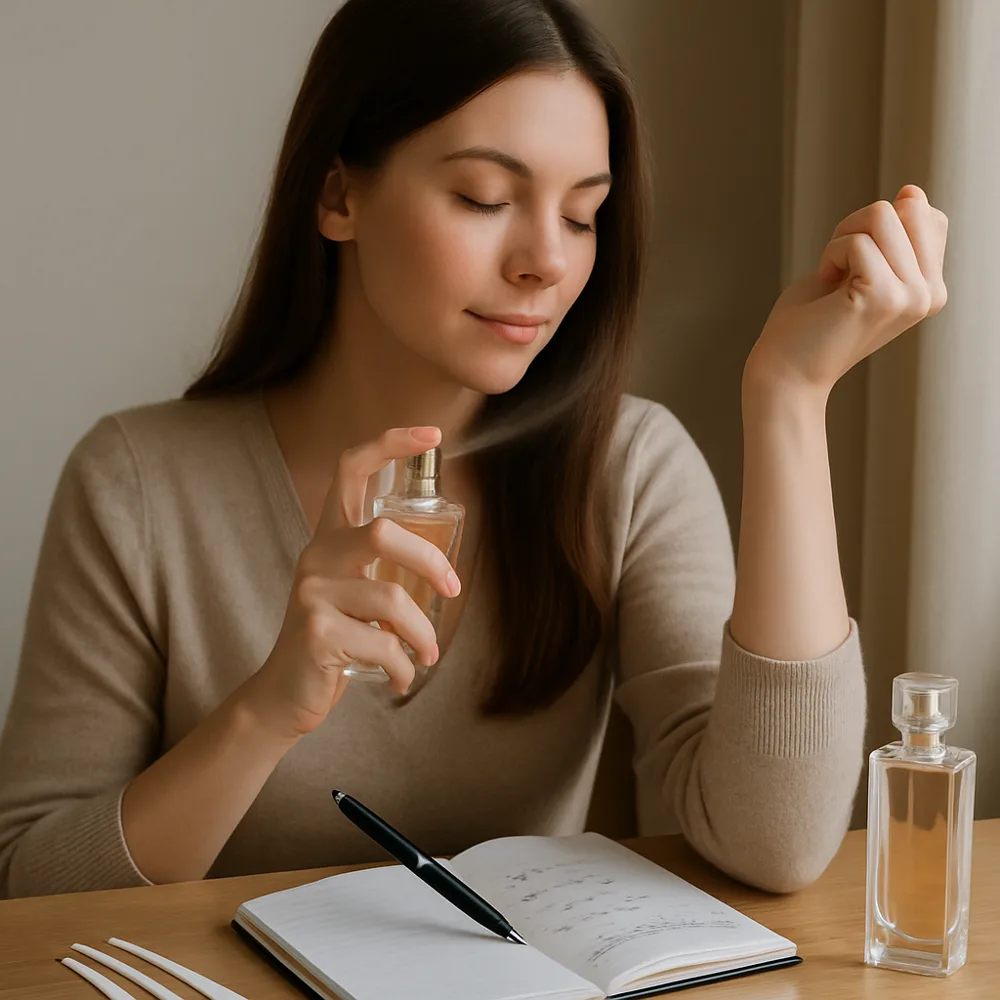
If you are exploring citrus scents, notice whether you prefer the fruit’s juicy side or the aromatic smell of its peel. Try comparing a few styles on blotter and skin, allowing time for the opening to settle. Citrus fragrances often suit daytime wear, warm weather, or moments when you want a clear, energetic impression, but there is no seasonal rule. Choose the version that feels comfortable to you.
Why Citrus Fades Quickly, and How Perfumers Work With It
Citrus materials are among the most volatile ingredients in perfumery. Most citrus oils are cold-pressed from the peel, and their main components, such as limonene, are small, light molecules that evaporate readily. That is why a citrus opening can feel vivid for the first few minutes and then seem to vanish. It is not a flaw in the perfume. It is simply how these materials behave, and it explains why the dry-down of a citrus fragrance often smells quite different from the first spray.
Perfumers have several ways to extend or support that brightness. Aromatic herbs like rosemary, basil or petitgrain (distilled from the leaves and twigs of the bitter orange tree) can echo the freshness of citrus while lasting a little longer. Neroli, from bitter orange blossom, bridges citrus and floral. Musks, vetiver and light woods give the impression of clean zest a base to rest on. Synthetic aroma molecules can also add a citrus-like sparkle that holds up better than natural oils alone.
The classic citrus traditions
Two long-standing styles are worth knowing. The eau de cologne tradition is built around bergamot, lemon, neroli and herbs, and is usually light and refreshing. The chypre structure pairs a bright bergamot opening with oakmoss and other darker base notes, so the citrus becomes a contrast rather than the whole story. Smelling one of each side by side shows how differently the same family of notes can be used. For more on how these groupings fit together, see our beginner's guide to fragrance families.
Practical tips for citrus lovers
- Expect to reapply lighter citrus scents during the day, or carry a small decant.
- Concentration matters: an eau de parfum may hold citrus longer than an eau de toilette, though this varies. Our guide to eau de parfum vs eau de toilette explains the difference.
- Store bottles away from heat and direct light, as citrus oils are especially prone to oxidising and turning flat or sour over time.
- Some cold-pressed citrus oils, notably bergamot, can increase skin sensitivity to sunlight. Many modern formulas use treated oils to reduce this, but if you have sensitive skin, consider applying to clothing or asking a dermatologist for advice.
Paying attention to how a citrus scent changes over its first hour will tell you more than the opening alone, and it helps you find the version that truly suits you.