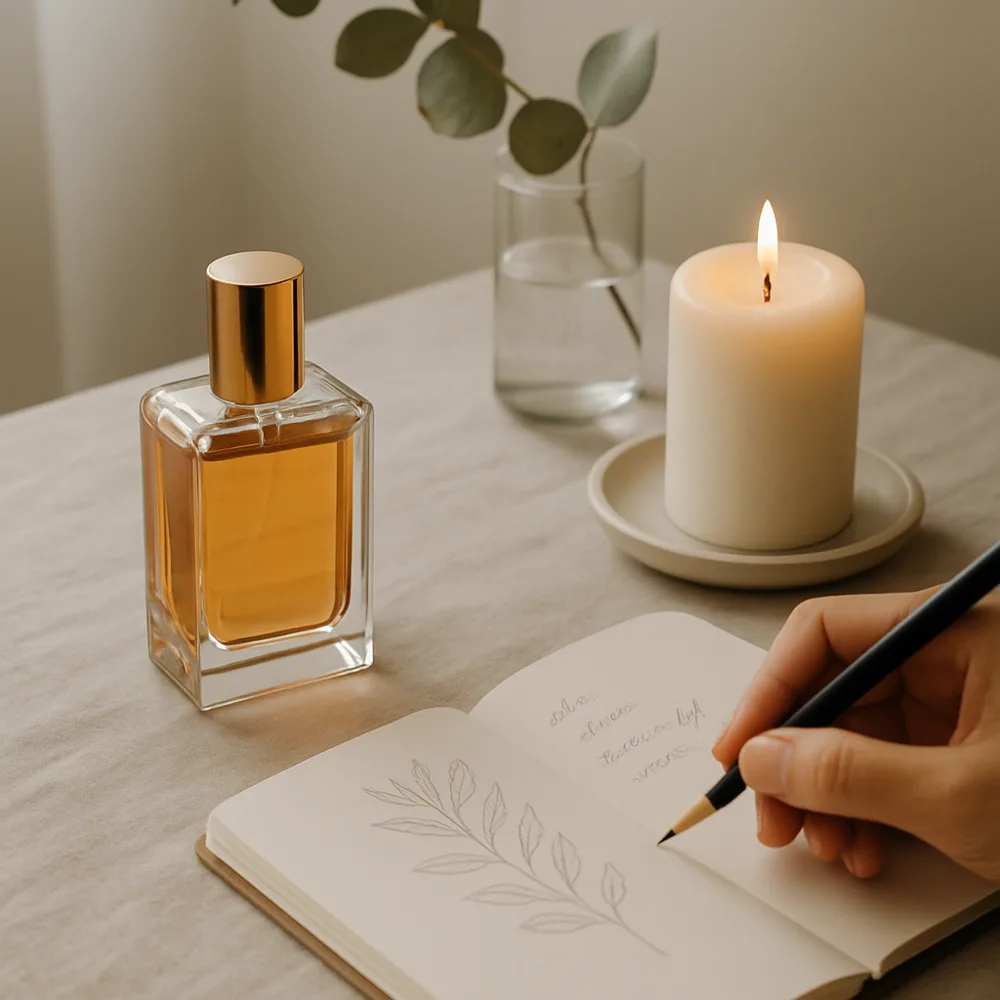
A perfume wardrobe does not need to be large. Start by thinking about the settings you experience regularly: work, weekends, travel, or evenings out. You might want one fragrance that feels easy for everyday wear, another with a different texture for cooler days, and a special-occasion scent. These roles can overlap, and there is no required number of bottles.
Before buying a full bottle, sample a fragrance more than once if possible. Wear it through an ordinary day, notice whether you enjoy the drydown, and ask yourself how often you would reach for it. Samples and smaller formats can be useful when you are still learning your preferences. Keep a simple list of what you own so you can see where a new scent would fit.
Variety can come from contrast rather than quantity. If your collection is mostly sweet florals, a crisp citrus or dry wood may offer a different mood. But do not buy a scent just to fill a category. A small wardrobe works best when each fragrance earns its place through personal enjoyment and practical use. Let your collection grow slowly as your taste becomes clearer.
Caring for and Refining a Small Collection
Once you have a few bottles you genuinely enjoy, the next step is keeping them in good condition and using them well. Fragrance is sensitive to heat, light and air, so a bathroom shelf or a sunny windowsill is rarely the best home for it. A cool, dark drawer or cupboard helps preserve the top notes, which are usually the first part of a scent to fade or turn sharp. Keeping bottles in their original boxes adds another layer of protection, and closing caps firmly after each use limits exposure to air.
It also helps to think about rotation. With a small wardrobe, you may find yourself wearing one favourite almost every day while the others sit untouched. That is perfectly fine, but checking in on the quieter bottles every few weeks can remind you why you chose them, or reveal that one no longer suits you. Taste changes with seasons, routines and simple familiarity, and a scent that felt essential a year ago may now feel like background noise.
Questions to ask before adding something new
- Does it do something my current bottles do not? A new scent should bring a different mood, weight or setting rather than repeat one you already own.
- Have I worn it on skin, not just on paper? Blotters show the opening, but skin chemistry and time shape how a fragrance really develops. Our guide to sampling perfume without rushing covers this in more detail.
- Does the concentration suit how I will use it? An office scent and an evening scent may call for different strengths, which is where understanding eau de parfum versus eau de toilette becomes useful.
Letting go is part of the process
A small wardrobe stays small partly because things leave it. If a bottle has gone unused for a long stretch, consider passing it to a friend who loves it, or decanting a little into a travel atomiser and keeping only that. Clearing space makes room for discoveries without the collection drifting into clutter.
Finally, learning the broad scent categories can make choices easier. Knowing whether you lean towards florals, woods, citrus or ambers helps you spot gaps and avoid near-duplicates. If that vocabulary is still new, the beginner's guide to fragrance families is a good place to start.