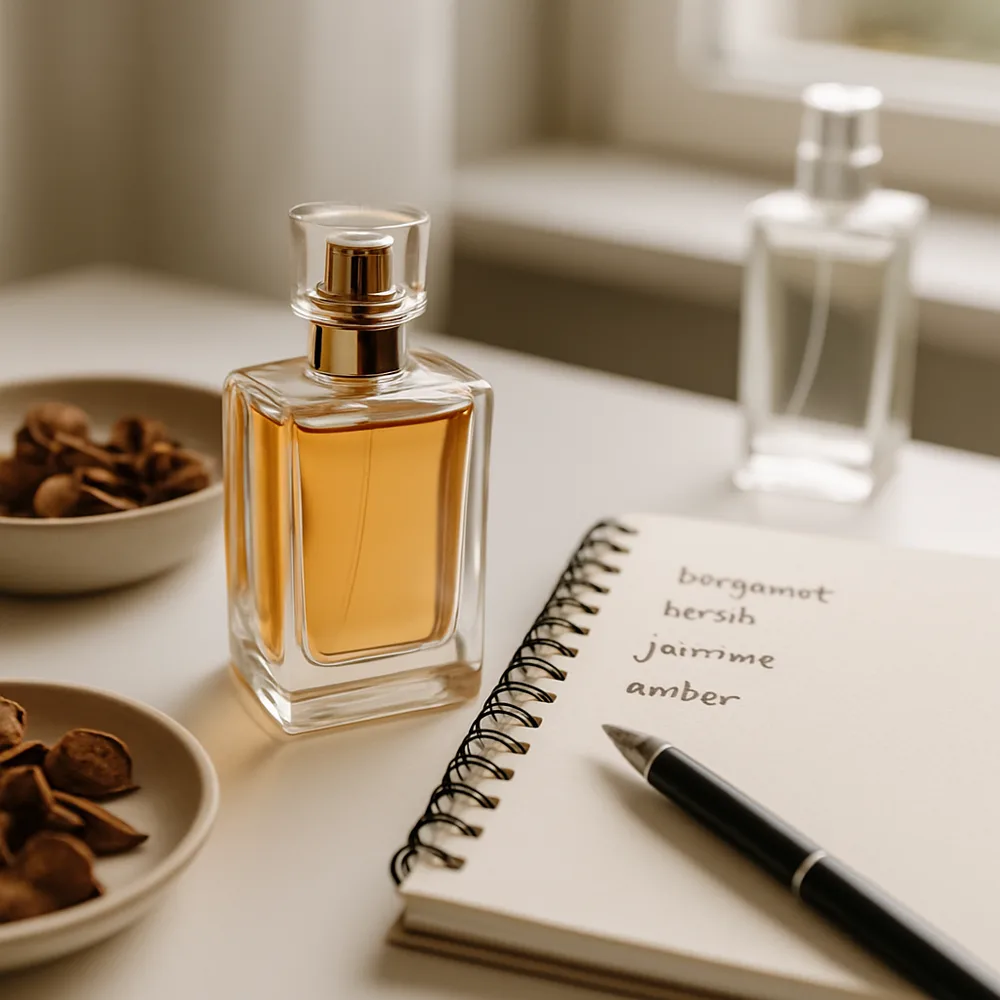
A perfume may smell different on a blotter, on your skin, and on someone else. Skin has its own scent and texture, and factors such as dryness, temperature, and skincare products can affect how a fragrance is perceived. These influences do not mean the perfume is changing into a completely different formula; they shape the way its materials are experienced.
Your surroundings matter too. Warm air can make a fragrance feel more pronounced, while cold weather may make some scents seem quieter. A room’s ventilation, nearby smells, and how recently you applied the perfume can all affect your impression. Even your attention changes what you notice: one day you may focus on citrus, and another day on the softer notes underneath.
For a fair test, use a clean area of skin and avoid layering scented lotion or another perfume underneath. Give the fragrance time, and compare it only with a small number of other scents. If you are evaluating a perfume for someone else, remember that your own skin and preferences provide only a partial preview. Sampling on the intended wearer is the most helpful way to judge how it feels.
What Happens to a Fragrance Over the Hours on Skin
Part of the reason a perfume seems to shift on skin is simply time. A fragrance is built from materials that evaporate at different rates. The lightest molecules, often citrus, aromatic herbs and some fresh or green accords, lift off quickly and dominate the first minutes. Florals, spices and many fruity facets tend to emerge as the opening fades. Woods, resins, musks and ambery materials linger longest and form the base you may still notice hours later. A blotter shows this progression too, but skin adds warmth and movement, so the stages can arrive sooner and blend more smoothly.
Skin temperature plays a large role in that pace. Warmer areas, such as the inner wrists, the neck and the inside of the elbows, help a scent radiate. That can make a perfume feel louder at first but shorter-lived. Cooler or clothed areas often keep a scent closer and slower to change. Fabric holds fragrance differently again. Some people find that a perfume smells truer to its original character on a scarf than on skin, though delicate fabrics can stain, so test on an inconspicuous spot first.
Why dry skin seems to lose scent faster
Many people notice that fragrance fades quickly on very dry skin. A commonly suggested remedy is to apply an unscented moisturiser before spraying, which gives the perfume a slightly more even surface to sit on. This is different from layering a scented lotion: an unscented base supports the fragrance without adding competing notes, so it is still useful when you are judging a new perfume.
Rubbing, reapplying and your own nose
Rubbing your wrists together after spraying does not ruin a perfume, but it warms the area and can hurry the opening, so you may miss some of the top notes. Pressing lightly or simply letting the spray dry is the gentler choice. Keep in mind, too, that your nose adapts to a scent you wear all day. When a perfume seems to vanish, it is often still noticeable to people around you, so resist the urge to keep reapplying.
To follow these stages more deliberately, it helps to know which materials sit at the top, heart and base. Our guide on how to read a perfume's notes explains the structure, and sampling perfume without rushing offers a calm routine for testing a scent across a whole day.