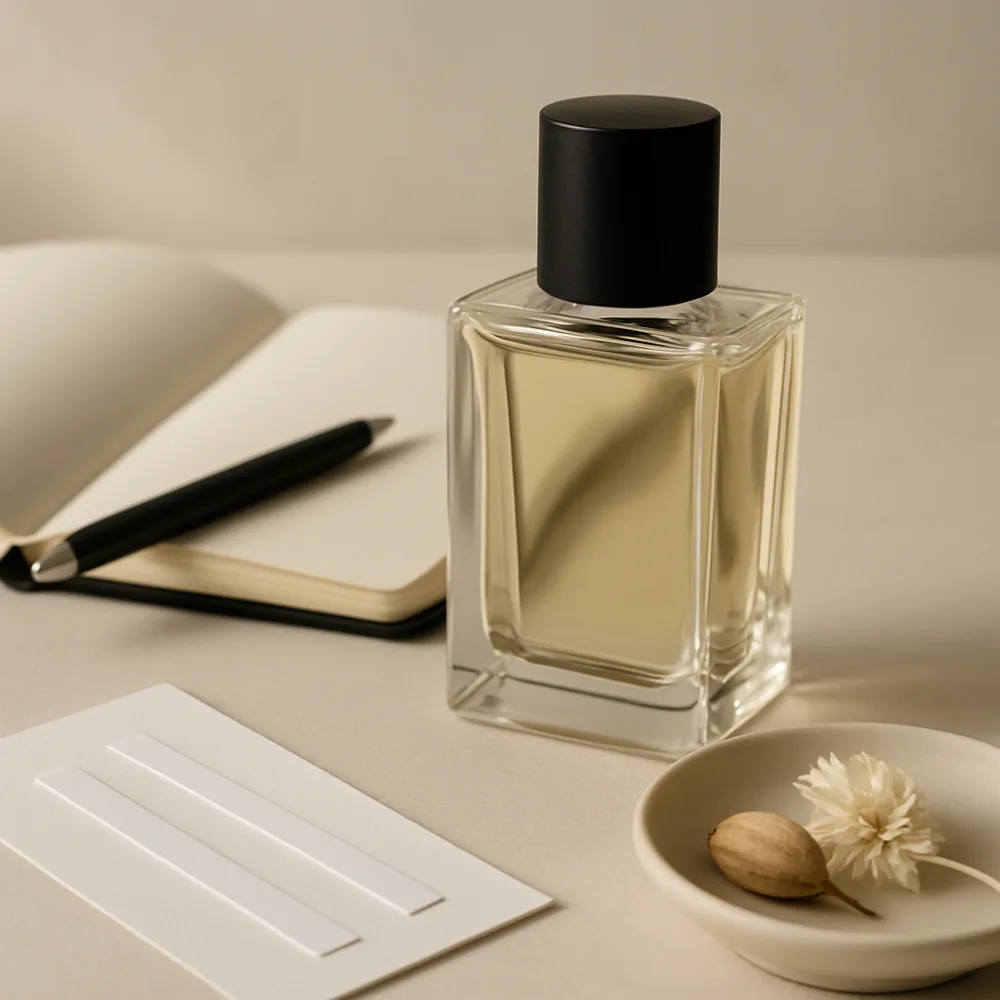
Perfume is often applied to pulse points, such as the wrists or sides of the neck, because warmth can help make a scent noticeable. These spots are options, not requirements. You can also apply fragrance to the chest or forearms, or simply spray into the air and walk through the mist if that feels comfortable. A light application is a good place to start.
Consider your setting and sensitivity. For a shared office, public transport, or a close conversation, keeping fragrance near the skin can be more considerate. If you prefer a scent trail, add a small amount and check how it develops before applying more. You cannot reliably control how far a perfume travels, since formula, amount, weather, and movement all play a part.
Take care around delicate fabrics, jewelry, and irritated skin. Some fragrances may mark clothing, so check the care label and test an inconspicuous area before spraying fabric. Avoid applying perfume to broken or freshly shaved skin. If you want a longer-lasting impression, moisturized skin can help reduce the feeling of dryness, but the effect varies. Comfort and moderation matter more than following a fixed application rule.
Fine-Tuning Where and How You Spray
Once you know the usual spots, small adjustments in technique can make a bigger difference than where the scent lands. One common habit is rubbing the wrists together after spraying. It does not ruin a perfume, but the friction and extra warmth can speed up how quickly the brighter top notes fade. Letting the fragrance dry on its own gives you a truer sense of how the opening moves into the heart of the scent.
Distance matters too. Holding the bottle a short way from the skin, roughly a hand's width, spreads the mist over a wider area instead of leaving a concentrated wet patch. A wider, lighter layer tends to smell smoother and is less likely to overwhelm you in the first few minutes.
Spots people often overlook
- Behind the knees and inner elbows: warm areas that let a scent rise gently, which suits skirts, shorts or short sleeves in warmer months.
- The back of the neck: fragrance here is noticed more by people around you than by you, so go lightly.
- Hair: some people mist the air above their head and let it settle. Alcohol can feel drying, so a hair-specific mist or a single light pass is the gentler choice.
Matching placement to concentration
Stronger formulas usually need fewer sprays and benefit from lower, less exposed spots such as the chest, where clothing softens the projection. Lighter formulas can take an extra spray or a placement closer to the collar. If you are unsure how strong your bottle is, our guide to eau de parfum vs eau de toilette explains how concentration affects intensity and wear time.
Learning from your own skin
The most reliable guide is observation. Try one placement for a full day, noting when you stop smelling it and whether anyone mentions it, then change one variable next time. Over a few wears you will learn which spots suit each fragrance in your collection. If you are still deciding what to wear, sampling perfume without rushing lets you test placement and longevity before committing to a full bottle.