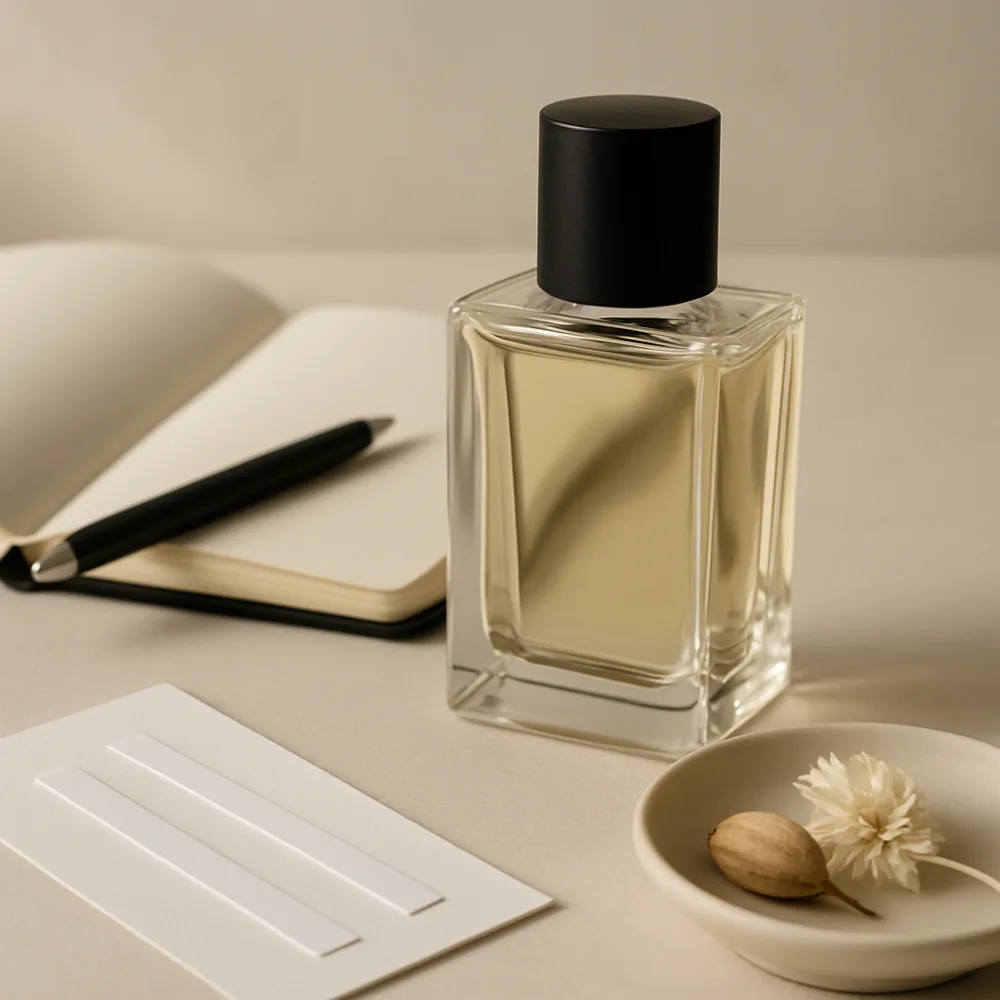
Layering means wearing more than one scented product at the same time, such as a perfume with a scented lotion or two fragrances together. It can create a personal combination, but it is not necessary for a perfume to smell complete. Some compositions are already balanced, and adding another scent may make them harder to appreciate.
If you want to experiment, start with one fragrance and a lightly scented or unscented moisturizer. When combining two perfumes, use a blotter or separate skin areas first. Choose scents with a possible point of connection, such as shared citrus, woods, or floral notes, but do not assume matching note lists will guarantee a good result. The finished blend is what matters.
Use small amounts and give the combination time to settle. A very bright scent can sometimes lift a heavier one, while a soft musk may round off a sharp opening, but results depend on the formulas and your perception. Keep a note of what you tried and how it wore. If the mix feels crowded, return to wearing each fragrance on its own. Layering is an optional way to explore, not a rule to follow.
Practical Approaches to Layering That Tend to Work
Once you have tried a simple perfume-and-moisturizer pairing, it helps to think about layering as a matter of structure rather than guesswork. Most perfumes are built around a fresh opening, a heart that emerges after some minutes, and a base that lingers longest. When two fragrances are worn together, these stages overlap, so the combination you smell at first spray will not be the one you notice an hour later. Judge a blend at several points during the day before deciding whether you like it.
Order and placement
A common habit is to apply the heavier or longer-lasting fragrance first and the lighter one on top. Richer bases such as amber, vanilla, resins or dense woods tend to anchor a blend, while citrus, green or aquatic scents fade faster and benefit from sitting where they can be noticed. Some people prefer not to spray one perfume directly over the other at all, applying one to the wrists and the other to the neck or chest so the scents meet in the air rather than on a single patch of skin. This gives a softer, more blended impression and makes it easier to tell which fragrance is doing what.
Pairings worth exploring
- Single-note scents with a fuller perfume: a simple musk, vanilla or sandalwood can add warmth without competing for attention.
- Citrus over woods: a sparkling top can freshen a dry, woody composition for daytime wear.
- Two florals from the same family: a rose with a violet or a white floral with a softer floral often feels coherent, as long as neither is too sweet.
If you are unsure how fragrances relate to one another, our beginner's guide to fragrance families explains which groups usually sit comfortably together.
Concentration and strength
Concentration affects balance too. An eau de parfum will generally project more and last longer than an eau de toilette, so pairing them in equal amounts can let one dominate. Start with a single spray of the stronger one. The differences between the two are covered in eau de parfum vs eau de toilette.
Finally, be considerate of others. Two fragrances together can be more noticeable than you realise, especially in offices or small spaces, because your nose adapts quickly to your own scent. A lighter hand is usually the better choice.