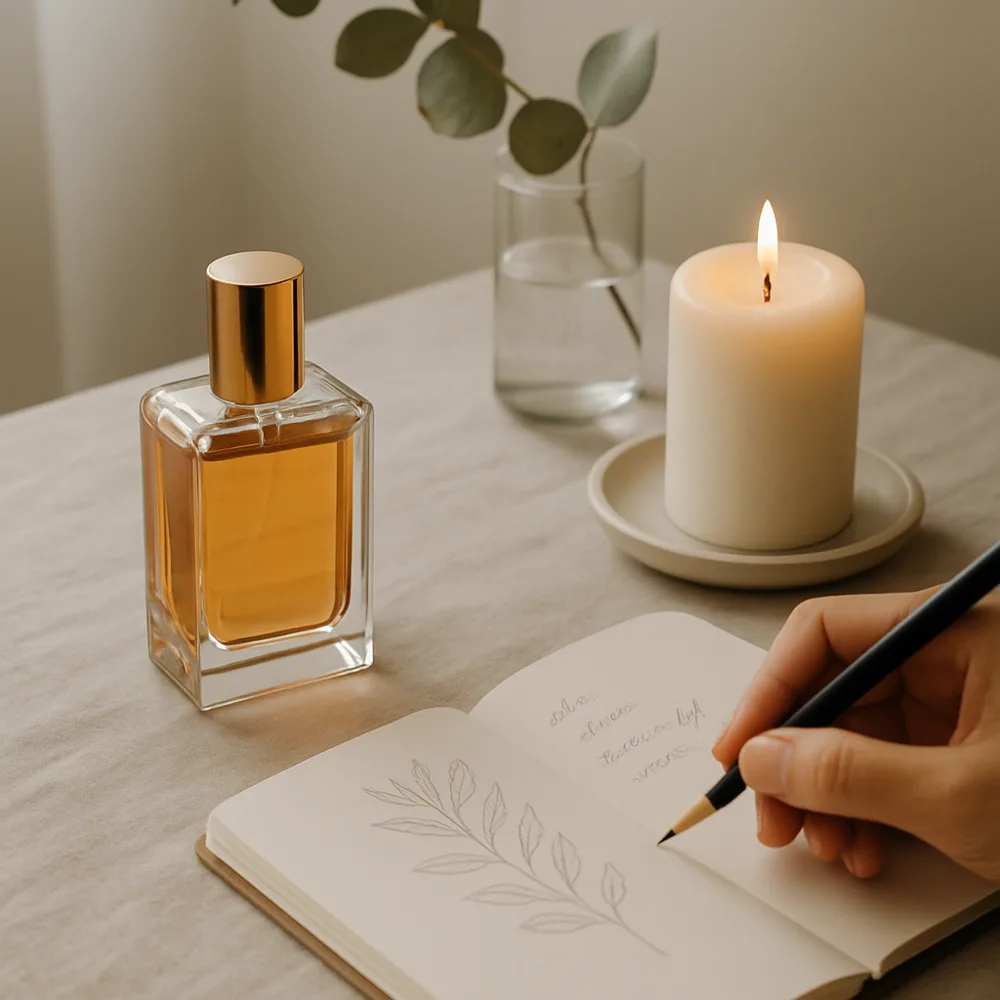
When you sample several perfumes, it can be difficult to remember which one felt crisp, sweet, or especially comfortable. A small notebook or note on your device can help. Record the fragrance name, the date, whether you smelled it on a blotter or skin, and a few words about your first impression. You do not need to capture every detail.
Check the fragrance again after it has settled. Write down whether the character changed and whether you enjoyed the later impression. Practical observations can be useful too: Was it easy to wear? Did it feel too strong in a small room? Would you reach for it in warm weather? Separating these questions makes your notes more helpful than a simple like-or-dislike rating.
Use your own vocabulary. “Tart fruit, clean shirt, soft wood” may be more meaningful to you than a technical description. Note what you would change, such as wanting less sweetness or more greenery. Over time, patterns may emerge and help guide future sampling. Keep expectations flexible: your taste can shift, and a fragrance you disliked in one setting may feel different in another.
Turning Your Sampling Notes into Better Choices
Notes become most useful when you come back to them. After a few weeks of sampling, set aside a quiet moment to read through everything you have written. Look for words that keep reappearing. If "powdery" shows up beside most of the scents you marked as uncomfortable, or "citrus" keeps appearing next to the ones you reached for on busy mornings, you have learned something a shop assistant could not tell you.
Add a little context to each entry
A short line about the circumstances can explain why the same perfume felt different on two occasions. Consider recording:
- Weather and setting: heat, humidity and dry indoor air can all change how a scent projects and how long it seems to last.
- Application: how many sprays, and where. One spray on the wrist and three on the neck can give very different impressions.
- Timing: roughly when you applied it and when you checked again, so you can compare the opening with the drydown.
- Your mood: a fragrance that felt heavy on a tired afternoon may seem cosy on a cool evening.
Compare the official notes with your own
Once you have your impressions written down, look up the brand's listed notes and set them beside yours. Sometimes they will match closely. Other times you may find that the "vetiver" in the description is what you called "smoky grass." Making these links slowly builds your sense of smell vocabulary and makes future descriptions easier to understand. Our guide on how to read a perfume's notes explains what top, heart and base notes usually mean in practice.
Group what you learn
Over time, try sorting your favourites by broad family, such as fresh, floral, woody or amber. Seeing which groups dominate your list can help you choose samples more deliberately instead of guessing. If the families are new to you, the beginner's guide to fragrance families is a helpful starting point.
Finally, keep a short "maybe later" list. Scents that did not suit you once are worth revisiting in a different season, and your earlier notes will show you exactly what has changed: the perfume's setting, or your own taste.