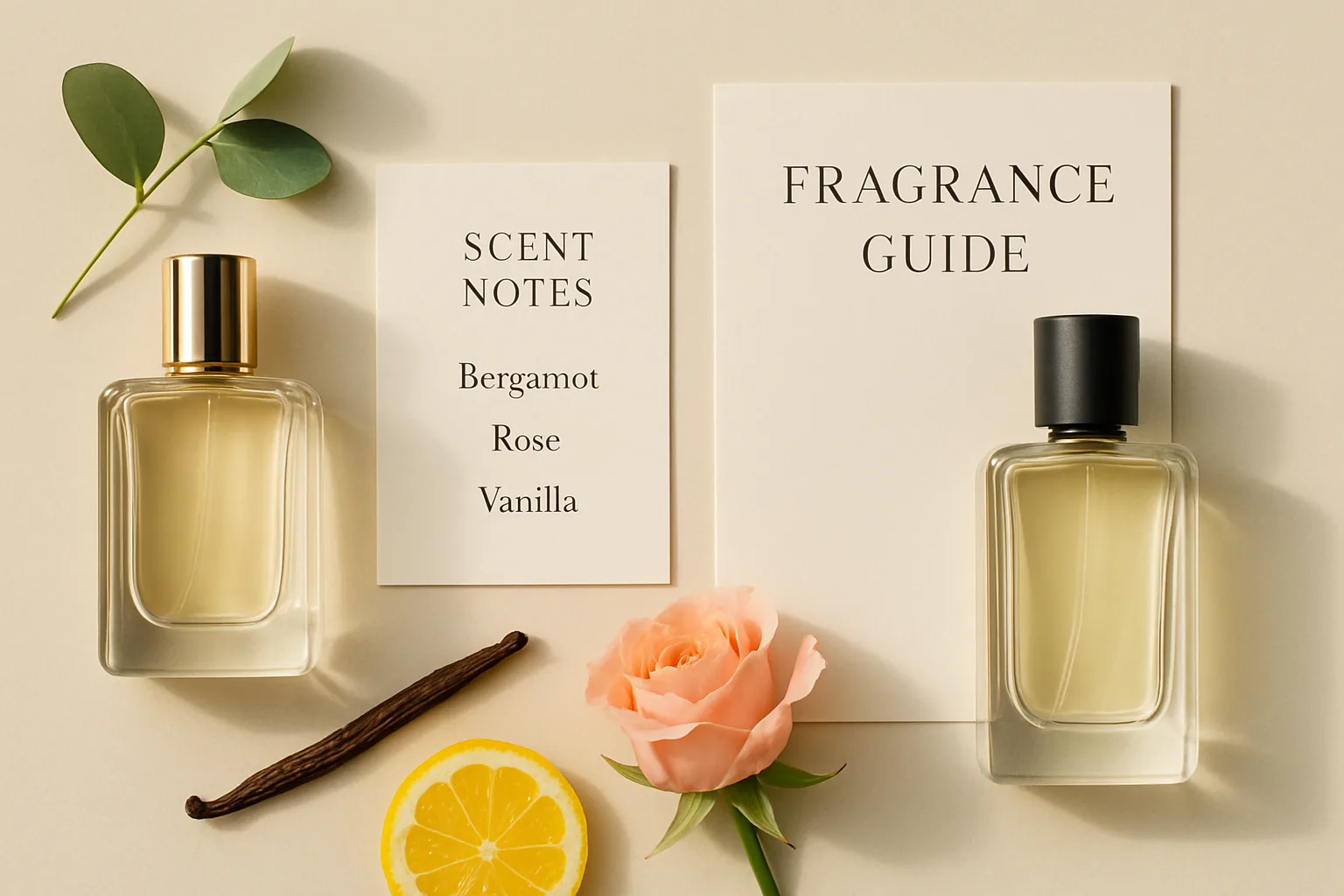
A perfume note is a descriptive cue for a smell or impression associated with a fragrance. It may refer to a recognizable material, such as lemon or cedar, or to a broader effect like smoke or clean fabric. Notes help readers picture a perfume, but a published note list is not a complete formula and does not reveal every ingredient used to make it.
An accord is a blend of materials that creates a unified impression. A perfumer might combine ingredients to suggest a flower, a fruit, a warm resin, or something abstract that does not exist as a single ingredient. Once blended, the accord can feel like one coherent idea. Many familiar perfume notes are actually built from multiple materials working together.
These terms can overlap in descriptions. A rose note may be an accord, and a fragrance might include a named ingredient while presenting it in a very stylized way. Rather than treating a note list as a recipe, use it to anticipate possible character. Then sample the perfume and decide what stands out to your nose. The distinction is useful, but your experience of the finished scent is what matters most.
Seeing Notes and Accords at Work in Real Perfumes
Once you know that a single listed note can stand for a whole cluster of materials, perfume descriptions start to read differently. Take a note like lily of the valley. The flower gives up very little usable oil, so perfumers have long recreated its fresh, green, slightly soapy character by combining synthetic and natural materials. When a fragrance lists it, you are almost certainly smelling an accord designed to evoke the flower rather than an extract of it. The same is true of many fruit notes, such as peach, pear or watermelon, which are usually built from blends rather than taken directly from the fruit.
Accords are also how perfumers create impressions that have no single source at all. A leather note might combine smoky, animalic and birch-like facets. An amber note in modern perfumery generally refers to a warm, resinous blend, often drawing on materials such as labdanum and vanilla-like compounds, not fossilised tree resin. Fougère and chypre are classic structures built around recognisable combinations, which is why they are treated as fragrance families rather than individual notes. If you want to explore how those structures group perfumes together, our beginner's guide to fragrance families is a good next step.
How this helps when you sample
Thinking in accords can make testing more rewarding. Instead of hunting for every item on a note list, try asking a few broader questions:
- Does the opening feel like one blended idea, or can you pick out separate ingredients?
- Does a named note smell realistic, or stylised and abstract?
- How does the overall impression shift as the scent dries down over several hours?
You may find that a perfume listing a dozen notes smells like two or three clear impressions, while a short list conceals a surprisingly complex effect. Neither is better; they simply reflect different styles of composition. Giving a fragrance time on skin is the best way to notice these layers, and our advice on sampling perfume without rushing covers how to do that well. For a closer look at interpreting the lists themselves, see how to read a perfume's notes.